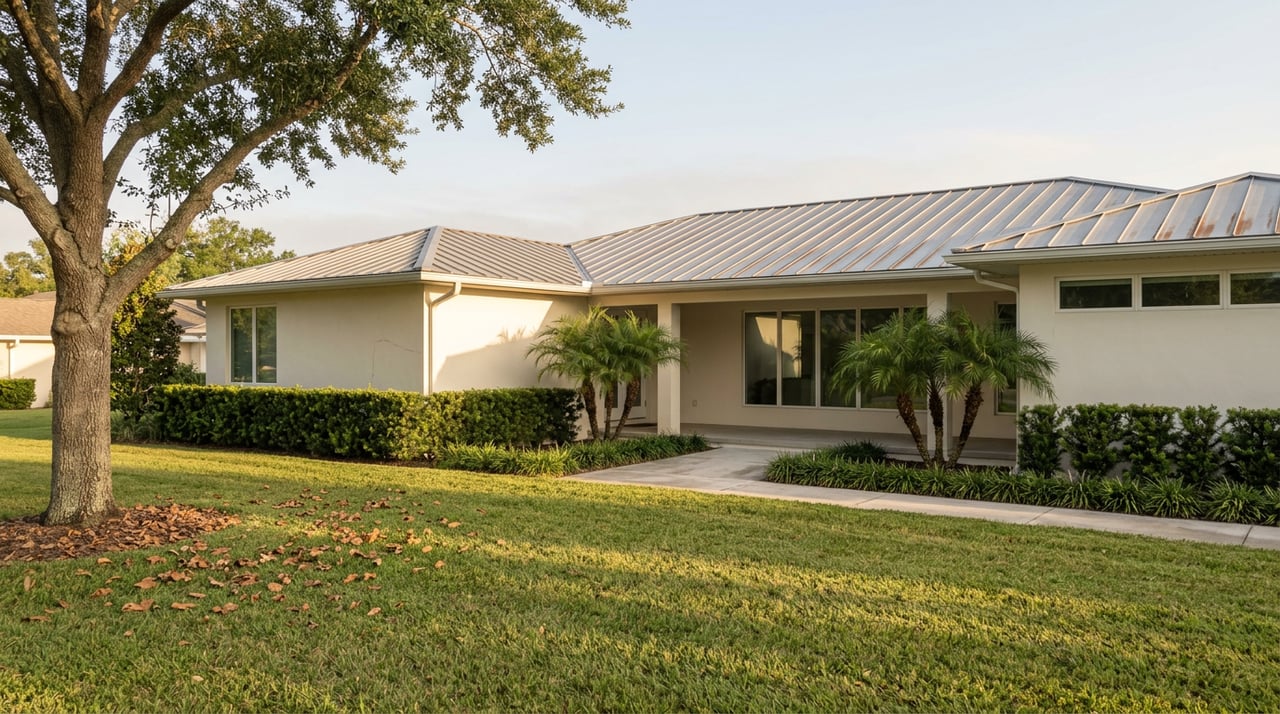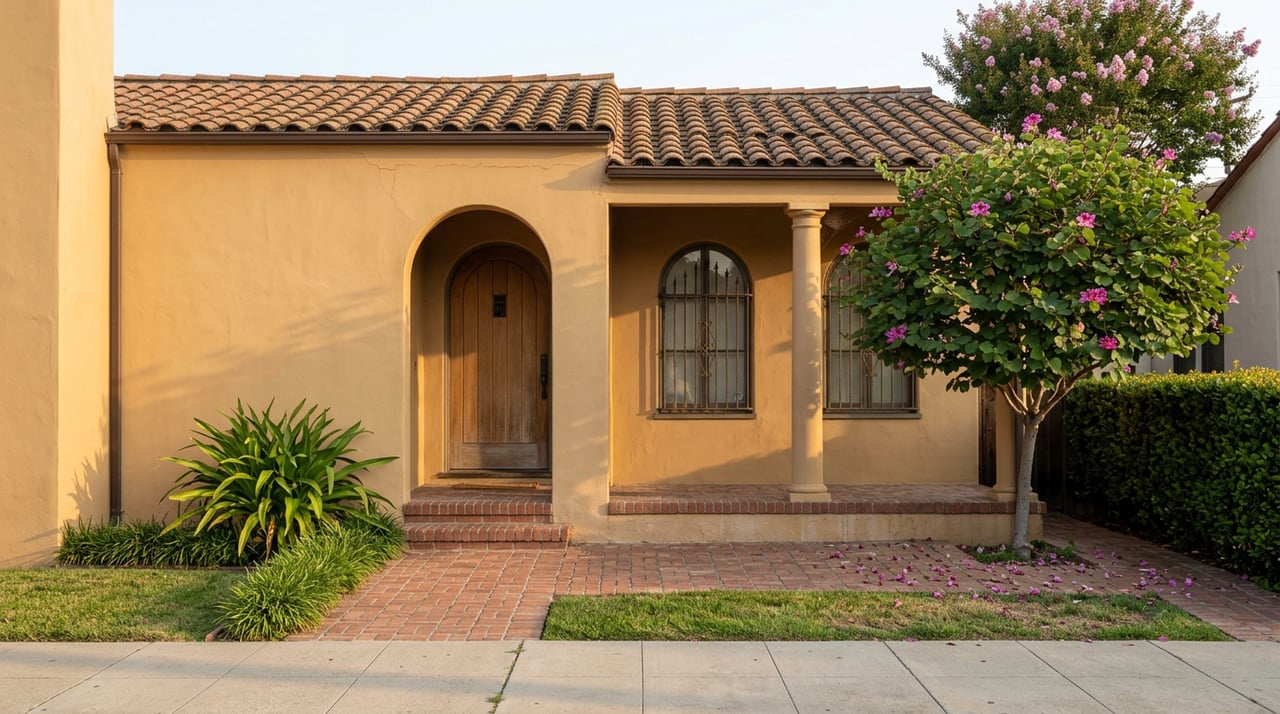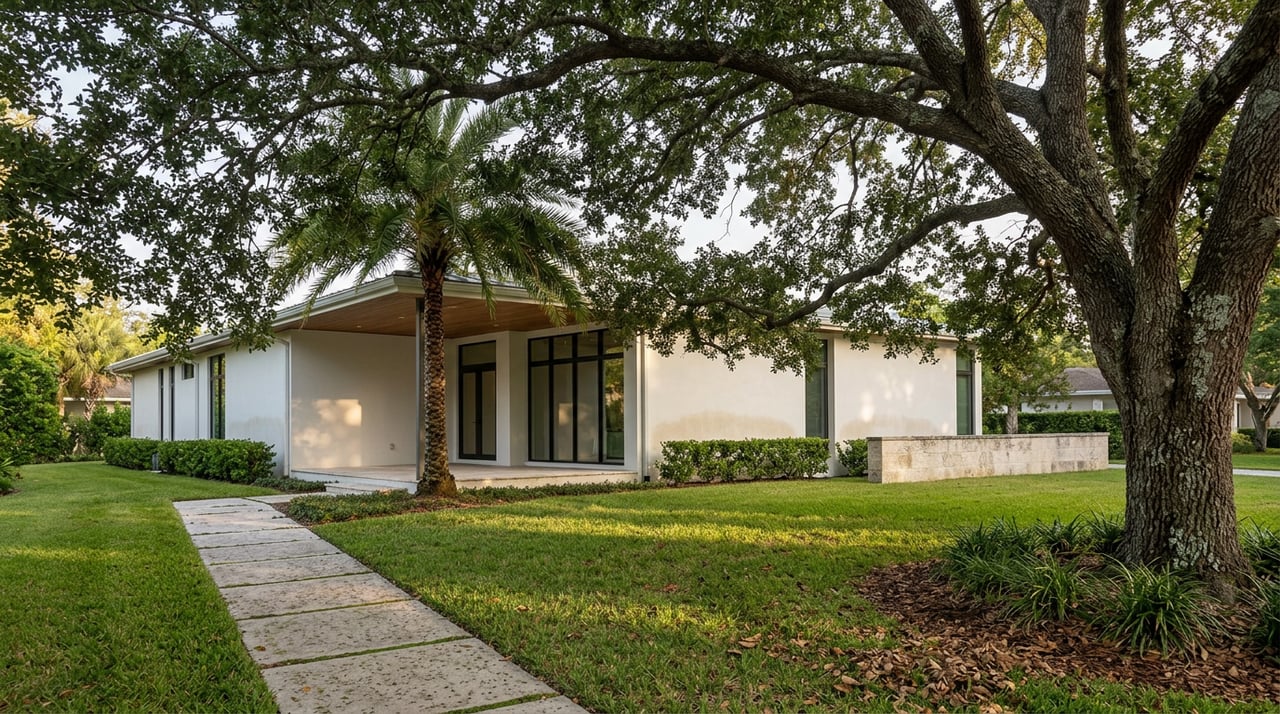
Stand at the corner of Linden Lane and Kumquat Avenue today and you will see a new house ringed by concrete, with almost no shade over the yard. What you will not see is the 1924 bungalow that stood there until recently, or the 26 trees that shaded it. Both vanished within days of each other to make way for the new build. Neighbors who watched it happen describe it less as a renovation story and more as a warning about how fast a canopied Grove lot can change once a permit clears.
That corner is not an outlier this year. It is closer to the new normal. And if you are buying, selling, or renovating a home anywhere in Coconut Grove right now, the thing most likely to blow your timeline is not the contractor, the lender, or the seller. It is the trees already standing on the lot.
The Math That Actually Decides Your Start Date
Miami-Dade County and the City of Miami both draw the line at 18 inches. Any trunk measuring 18 inches or more in diameter, taken 4.5 feet above natural grade, counts as a specimen tree. Below that threshold, removal is a routine permit. At or above it, the file moves into a full environmental review that can run past 30 days depending on how complete the paperwork is.
That review comes with a 10-day public appeal window after a permit is issued. For a buyer who has already lined up a contractor, or a seller counting on a closing date, those 10 days matter more than almost anything else in the file. A neighbor who waits until the last possible day to file an objection can still knock the entire project, demolition and every trade scheduled behind it, into the next month. On a project where impact glass and stone are already sitting in a warehouse waiting to be released, that month gets expensive fast.
Removal is not the end of the obligation, either. The county requires inch-for-inch replacement by trunk diameter, and when a permit calls for 10 or more replacement trees, at least half must be native species, with palms capped at 30 percent of the total. Where a lot cannot physically fit enough replacement trees, the difference gets paid into the city's Tree Trust Fund instead. On an estate-sized lot with a mature oak in the footprint, that math can turn a landscaping line item into a real budget conversation before the architect finalizes a plan.
Why the Rules Alone Don't Predict the Outcome
Coconut Grove's Historic and Environmental Preservation Board, the body that hears tree-removal appeals, had faced at least 14 of them since January 2026, according to a late-August count. In all of 2025, it heard exactly one. The volume got bad enough that the board expanded from monthly to twice-monthly meetings just to keep up.
What makes this a genuine risk, rather than just a busier calendar, is how unevenly those appeals have landed. Four recent cases show the spread:
| Address | What Was at Stake | How It Resolved |
|---|---|---|
| Emathla Street, North Grove | 11 trees, including 4 oaks, 2 classified as specimen | Lot was targeted for removal in April 2026 after city officials approved it |
| El Prado Boulevard, South Grove | 15 trees (10 hardwoods, 5 palms), with 5 more to relocate | Board split; the mitigation plan drew criticism for placing replacement trees in a narrow strip out of public view |
| Swanson Avenue | 2 specimen trees | Board unanimously reversed the removal permit |
| Grand Avenue (3520) | 57 trees, some approved retroactively | A neighbor's appeal was dismissed on a procedural issue before the merits were heard |
Four properties, four different outcomes, none of them obvious from the permit application alone. A resident whose own appeal was the only one granted at a July hearing later said the board's session had run until two in the morning, calling that alone proof the process is not working.
"We're still in this crisis mode of large trees being removed and our canopy dwindling," said Ian Wogan, the North Grove arborist who now represents Coconut Grove's district on the city's new Tree Ordinance Advisory Committee.
The Bigger Number Behind the Cases
The city and county both set a goal of reaching 30 percent tree canopy by 2030. Current estimates place actual coverage at 17 to 20 percent, with little evidence of meaningful gains in recent years. Coconut Grove is central to that shortfall in a way that cuts against its reputation. An independent tracker called Miami Canopy Watch, built from the city's own permit records, lists 28 tree-removal records in the Grove, more than any other neighborhood in its dataset, despite the neighborhood carrying some of the city's strongest place-specific tree protections through its Neighborhood Conservation District overlays.
Part of the reason is legal rather than botanical. A 2019 court ruling found that the broad protective language in the Grove's NCD-3 overlay cannot be used as the standard for deciding a waiver, which weakened the overlay's practical force even as its stated intent, preserving the Grove's heavily landscaped character, stayed on the books unchanged. A push to fix that language had not received a public response from the district's city commissioner as of late July 2026.
Separately, internal city policy changes made permitting faster in ways that cut against oversight. Reviewing officers are no longer required to conduct site visits before issuing tree removal permits, a change critics say makes it easier for incomplete or misleading applications to clear without anyone confirming what is actually growing on the property.
In response to the volume and the criticism, the City Commission created a 10-member Tree Ordinance Advisory Committee in May 2026, with two seats per commission district. The Grove's seats went to Wogan and to Chris Baraloto, associate director of Florida International University's International Center for Tropical Botany. The committee began an eight-month review in July and expects to present recommendations to the City Commission by March 2027. Until that review concludes, the rules a buyer or seller is working under today are the rules in flux.
What This Means If You Are Buying
If you are looking at a home on a canopied Grove lot, whether in Center Grove, North Grove, South Grove, or along Bayshore, the tree survey deserves the same attention as the inspection report. Before writing an offer, it is worth asking directly whether any trunk on the property is at or near 18 inches DBH, whether a removal permit has already been filed or approved, and whether that permit's 10-day appeal window has closed. A pending appeal on a property you are under contract for can delay the renovation you are planning by a month or more, and the mitigation cost that comes with removal should be part of your renovation budget conversation from the start, not a surprise after closing.
What This Means If You Are Selling
If your Grove property has mature trees, disclosing what is known about their protected status and any pending permit activity gives buyers confidence rather than raising doubt. A seller who can point to a completed arborist assessment, a clear permit history, and a closed appeal window is offering something a canopied lot rarely comes with on its own: certainty about the timeline the next owner will actually face.
A Few Questions Worth Asking Directly
Does every mature tree in Coconut Grove require a permit to remove? No. Only trees at or above 18 inches DBH trigger the specimen-tree review. Smaller trees generally fall under a routine permit, though enforcement activity has increased across the board this year.
Is Coconut Grove's tree ordinance the strictest in Miami-Dade? No. Coral Gables protects any tree of 3 inches DBH or more, a far lower bar than the county's 18-inch standard that governs the Grove. The Grove's rules are still layered with additional Neighborhood Conservation District review that Coral Gables does not apply in the same way.
What happens if a previous owner removed protected trees without a permit? Unpermitted removal can carry significant fines and mandatory replanting obligations that may attach to the property rather than the individual who removed the trees, which is one more reason a full tree history belongs in due diligence before closing.
Coconut Grove's canopy is one of the things that makes the neighborhood what it is, and in 2026 it is also one of the more unpredictable parts of buying, selling, or building here. Working through what is actually growing on a lot, and what the city currently requires before any of it comes down, is the kind of groundwork that protects both a closing date and a budget.
If you are weighing a purchase or a listing on a canopied Grove lot and want a clear read on what the tree file means for your timeline, Karina Reyes is glad to walk through it with you. Let's Connect.