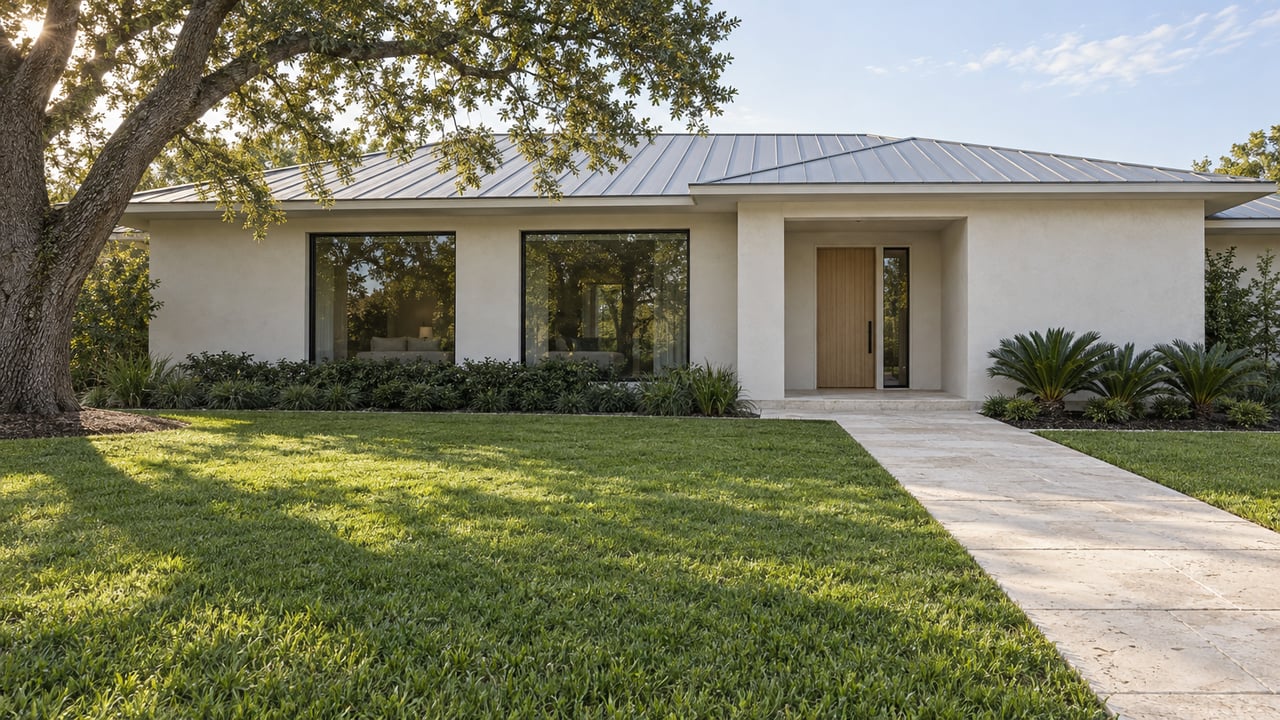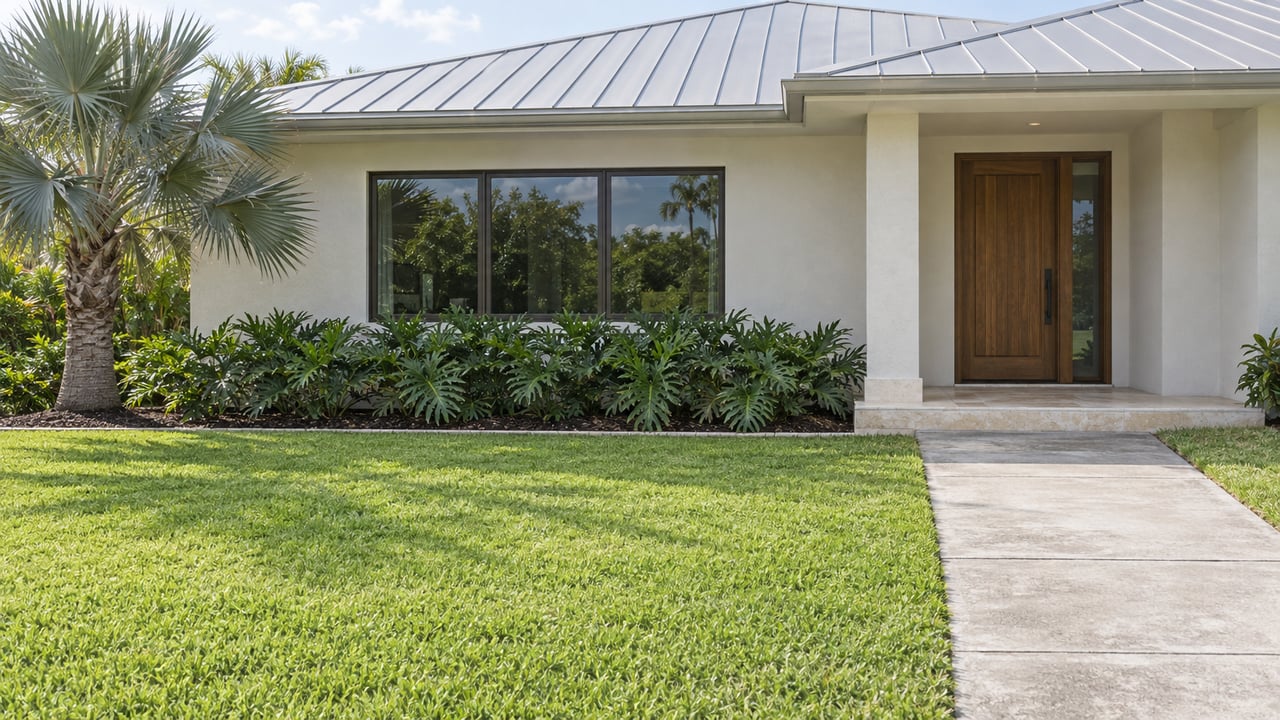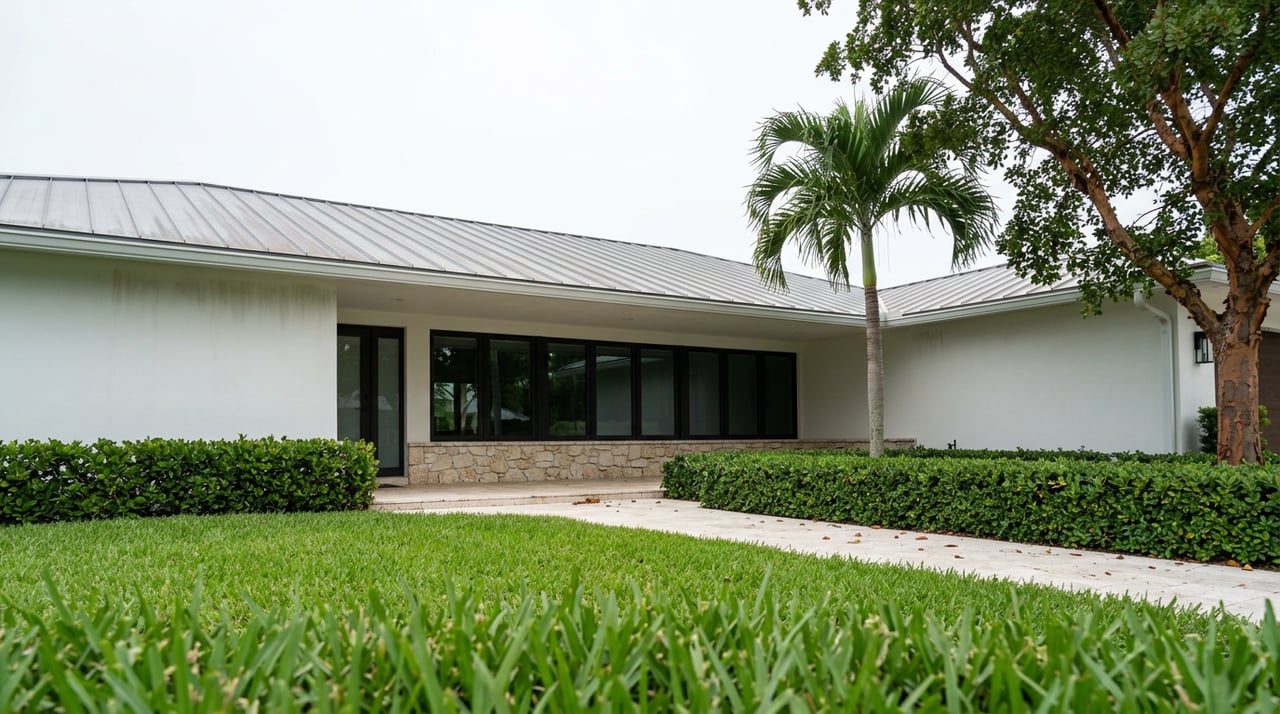
According to a Hoodline report published in September 2026, an 11,700-square-foot spec home in Pinecrest closed at its full $16.3 million ask, even as luxury contracts across Miami-Dade slowed to just 12 for the week. In that same reporting window, a second Pinecrest property went under contract a few streets away: a 6,800-square-foot house on Southwest 118th Street, built in 2023, with seven bedrooms, eight and a half baths, a pool, and a private tennis court. It carried an asking price of $9.6 million, or $1,400 per square foot. The owners had paid $1.1 million for the same parcel back in 2020.
That jump, from $1.1 million to a $9.6 million ask on the same piece of ground in six years, is not really a story about a house. It is a story about a lot. And it points to the fact most buyers comparing Pinecrest to Palmetto Bay, Coral Gables, or South Miami miss until they are already writing an offer: in Pinecrest, the structure is often the smaller half of the transaction. The land underneath it is doing most of the work.
Why the Village Can't Make More Lots
Pinecrest incorporated as its own village in 1996, and one of the first things it protected was lot size. Much of the residential land is zoned EU-1, an estate classification that keeps minimum lot sizes near an acre and makes subdividing an existing parcel into two smaller ones extremely difficult under the village's own zoning code. That single rule means the number of buildable Pinecrest lots is close to fixed. New construction happens by tearing down and rebuilding on an existing acre, not by carving new acres out of old ones.
For a buyer, this changes the math in a way that a median price alone never shows. You are not shopping a growing inventory of comparable homes the way you might in a neighborhood where builders can still add supply. You are shopping a roughly fixed set of acre parcels, and every one of them is either an older house you will renovate or a newer house someone already renovated for you, at a price that reflects both the build and the scarcity of the dirt it sits on.
Two Markets Wearing One Zip Code
Active Pinecrest single-family listings this summer told a story with two very different endings depending on the year the house was built. Across active listings as of late July 2026, the typical home on the market dated to around 1997. Older homes on strong acre lots were pricing well below the per-square-foot median, while newer construction was commanding a premium running close to double that figure. The Southwest 118th Street listing, asking $1,400 per square foot for a 2023 build, sits at the high end of exactly that pattern.
This is also why Pinecrest's average sale price and its median sale price refuse to line up. One August 2026 accounting put the average sale price near $4.39 million with listings sitting on the market an average of 79 days, while a separate active-listings snapshot from July 2026 showed a median asking price near $4.7 million against an average closer to $6.1 million, a gap wide enough that a handful of top-end estate listings were clearly pulling the average well above what a typical Pinecrest buyer was actually asking. A third view, pulled from September 2026 listing data, put the median list price nearer $3.2 million at $829 per square foot.
None of those numbers contradict each other once you see what is producing the spread. Pinecrest is not one market with noisy pricing. It is two markets, an aging ranch market and a new-construction market, both trading under the same village name, both constrained by the same fixed supply of acres, and both showing up in the same aggregate statistics as one blended, confusing number.
| Older home on an acre lot | New construction on an acre lot | |
|---|---|---|
| What you are pricing | The land, plus a renovation project | The land, plus a finished, current-code house |
| Where it sits in the range | Toward the lower end of per-square-foot asks | Toward the upper end, as seen in the $1,400/sqft Southwest 118th Street listing |
| Main point of friction | Insurance underwriting on an older roof and openings, appraisal gaps if the interior lags the neighborhood | Less room to negotiate, since the price already reflects both build cost and land scarcity |
| Why buyers still choose it | Often the only realistic way to get an acre inside the village at a lower entry price | Certainty. Everything is already built to current wind and flood standards |
Why the House Still Matters, Just Not the Way You'd Think
Insurers do not treat a 1960s roof the same way they treat one installed under current code. On an older Pinecrest ranch, roof age, window protection, and documented wind mitigation features can decide whether the home is easily insurable at a reasonable premium, and that is a conversation worth having before you fall in love with a floor plan, not after you are already under contract. That is also part of why the trade taking hold across the village right now looks less like buying a house and more like buying a construction decision: renovate an older home to modern standards and keep more of your budget in the land, or buy new and pay for certainty on day one.
The Countywide Cooling Doesn't Reach Every Street the Same Way
Miami-Dade logged 847 closed sales priced at $1 million or above in the first quarter of 2026, with cash accounting for roughly 58% of those luxury purchases. Weekly luxury contracts across the county eased further heading into the end of August. That slowdown is real, and it is showing up in longer days-on-market figures in parts of the luxury market.
Pinecrest is feeling a version of that cooling too, most visibly in longer time on market compared to the frenzy of a few years ago. But the fixed-lot mechanism means the floor under Pinecrest values is different from the floor under a neighborhood where builders can still respond to demand with new supply. When the number of acre parcels cannot grow, a countywide pullback in luxury contracts thins out the pool of active buyers without doing much to the actual scarcity those buyers are competing over. That is a meaningful distinction if you are trying to decide whether a slower market means better leverage on price, or just longer waits with the price holding roughly where it started.
Before You Write an Offer
- Ask when the roof, electrical, and plumbing were last replaced, not just the year the house was built. On an older home, that answer affects your insurance quote more than almost anything else in the listing.
- Compare per-square-foot price only within the same era of construction. A 1960s ranch and a 2023 rebuild on the same street are not the same product, even at the same address quality.
- If you are buying as an investor or a non-owner-occupant, know that Florida currently caps annual assessment increases on non-homestead property at 10%, and that cap resets to full market value when the property changes hands. A statewide amendment on this November's ballot would lower that cap to 5% starting in 2027, which is worth factoring into a longer hold calculation.
- Get a lot survey early. In a market where the land is the scarce asset, confirming exact lot dimensions and setbacks before you fall in love with a house protects you from paying acre-level prices for a smaller parcel.
A Few Questions Worth Asking Directly
Will Pinecrest prices actually drop if the countywide slowdown continues? The zoning constraint that limits new lots does not disappear because contract volume slows. A pullback in buyer competition can extend days on market and soften negotiating dynamics, but it does not create new acreage, which is the thing actually holding the floor in place.
Is it smarter to buy an older ranch and renovate, or buy new construction? There is no universal answer. A ranch gets you the acre at a lower entry price with a renovation project and an insurance conversation ahead of you. New construction gets you certainty and current-code systems, priced accordingly. The right choice depends on your timeline, your appetite for a renovation, and how you weigh land value against finished-house value.
Does the North Pinecrest area really behave differently from the rest of the village? The pocket closer to the commute corridor toward Coral Gables has seen some of the fastest activity in the village recently. It is one more reason to look at Pinecrest street by street rather than as a single blended market.
If you are weighing a Pinecrest purchase against Palmetto Bay, Coral Gables, or another South Miami-Dade community, the acre-lot math is worth walking through before you start touring. I grew up in this market and spend my days inside it, and I would rather help you understand what you are actually pricing before you write an offer than after. Reach out to Karina Reyes and let's connect.
This article is general information, not legal, tax or financial advice. Consult a qualified professional about your situation.