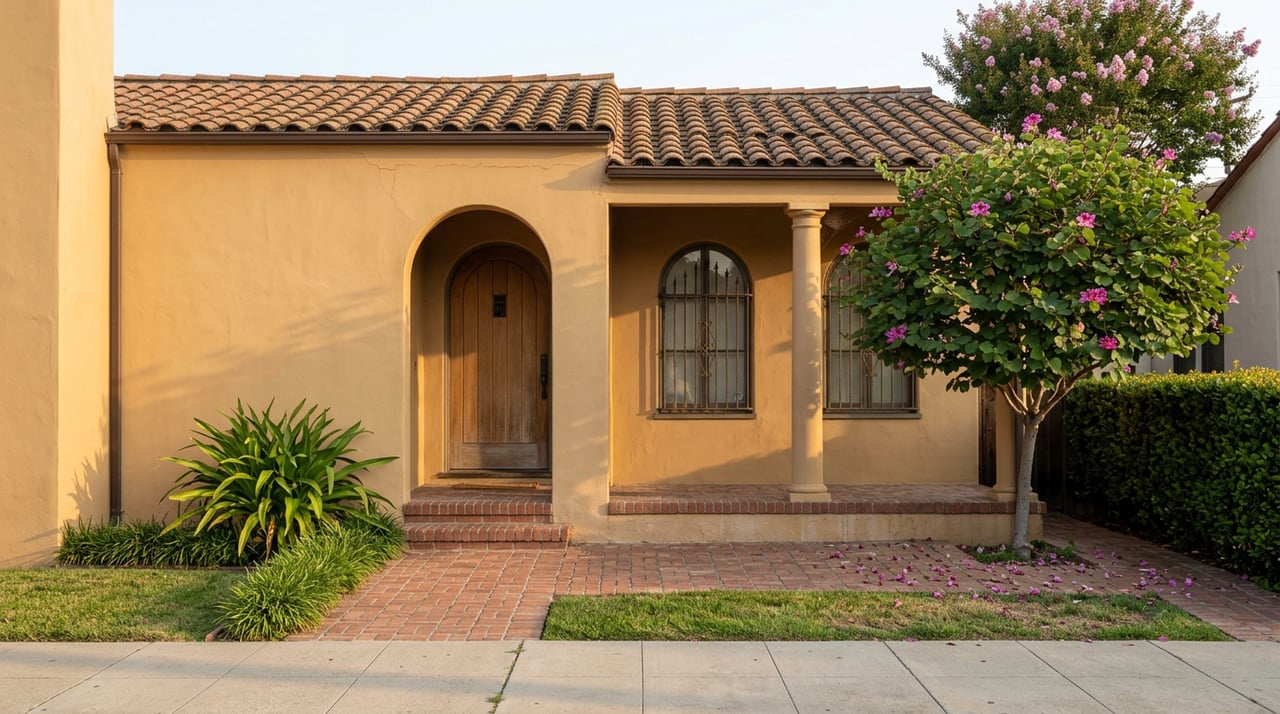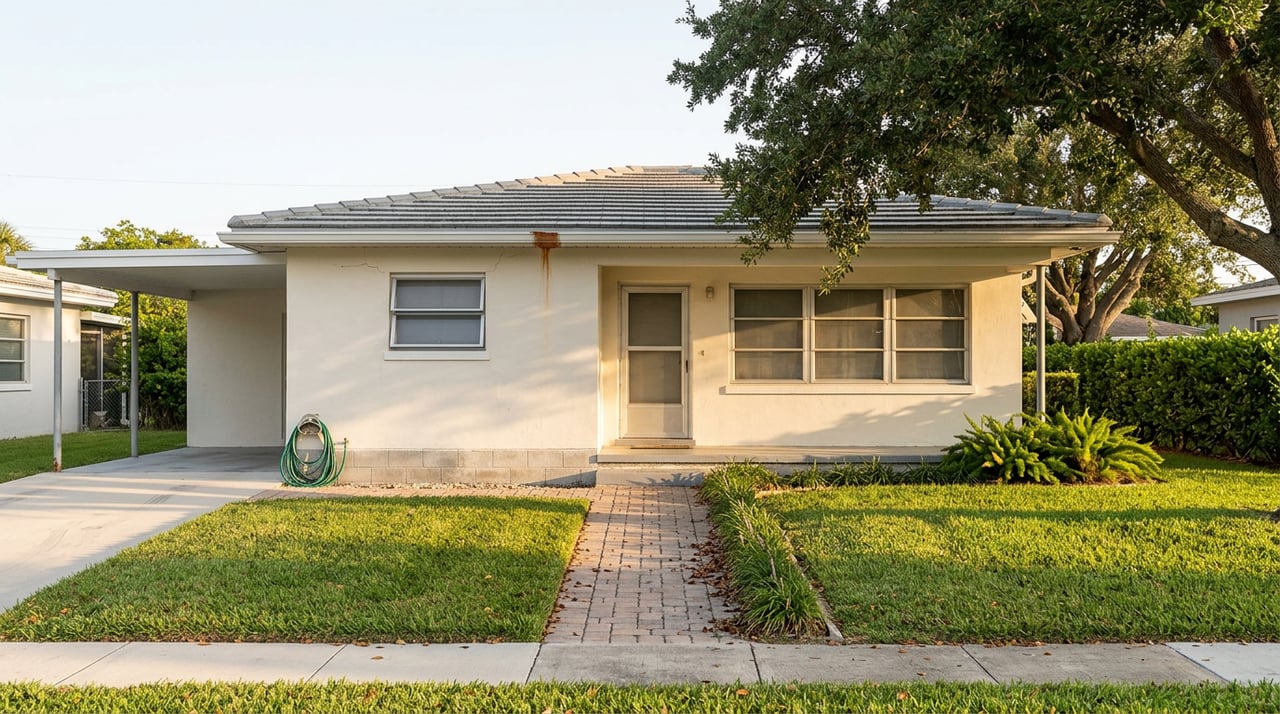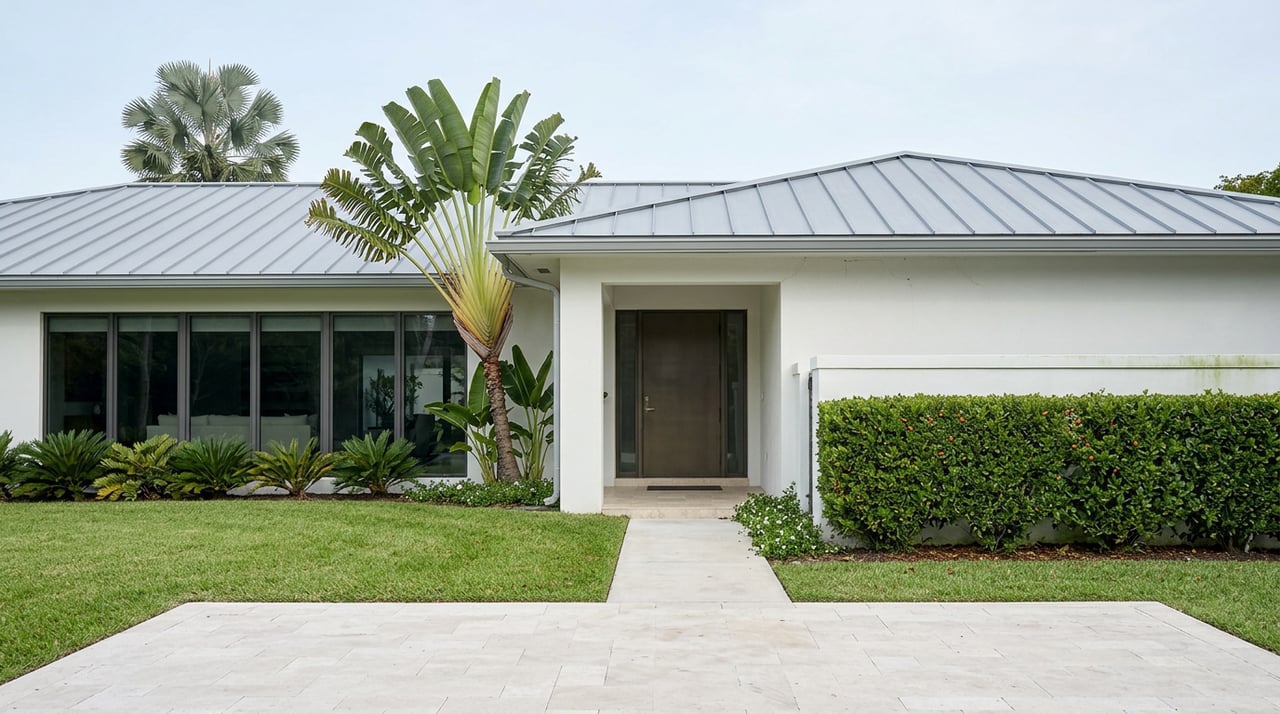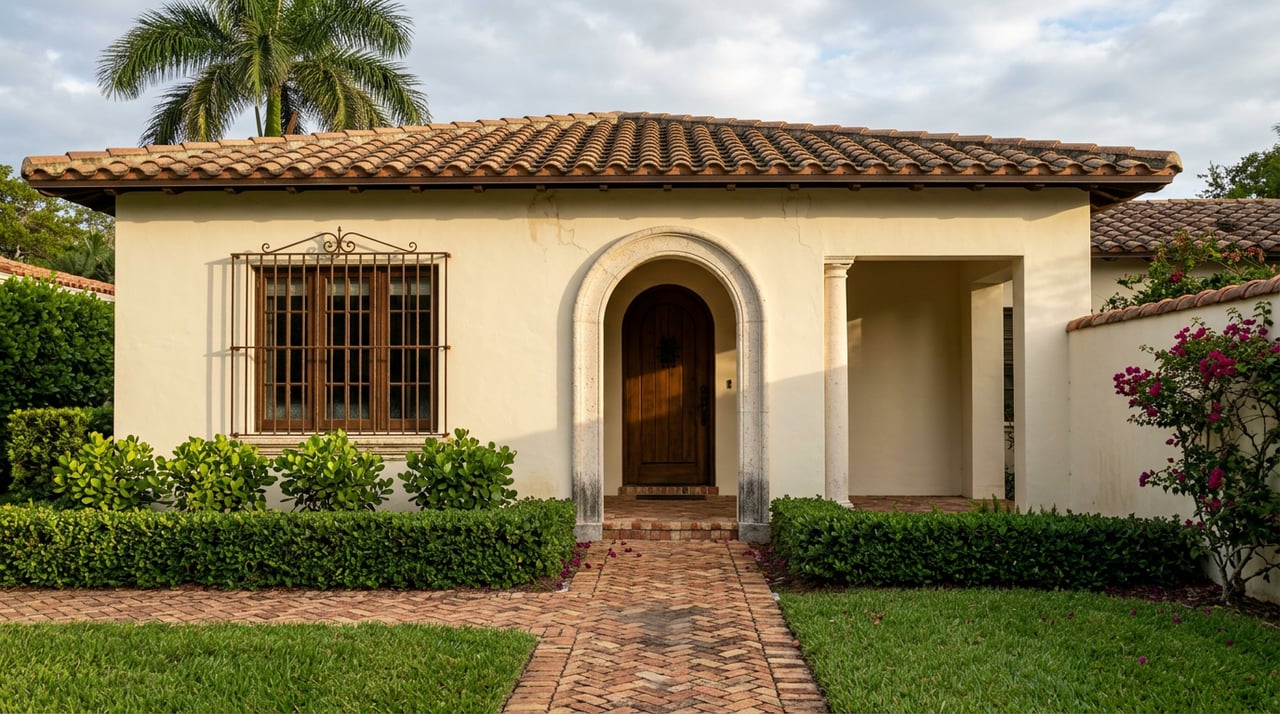
Miami-Dade single-family sales rose 16.8 percent year over year in June 2026, the tenth consecutive month of gains, while active single-family listings fell to 4,380, down nearly 23 percent from the year before. Every number in that report points the same direction: homes moving faster, buyers competing harder, sellers holding more leverage than they've had in years.
None of that touches the one clock in Coral Gables that actually decides how fast a house can change on the outside. That clock belongs to the Board of Architects, and it runs on the same weekly schedule it has followed for decades, unmoved by how many buyers are waiting or how thin inventory gets.
If you're preparing a Coral Gables home for market and planning a quick exterior refresh before photos, or buying one and assuming you'll start work the week after closing, the county data you've been reading won't tell you what you actually need to know. This will.
What Actually Triggers Board Review
The distinction that surprises most people has nothing to do with cost or complexity. It has to do with whether the work touches the outside of the house. New construction, additions, roof changes, window replacement, fence and gate installation, driveway and paver work, paint color, pools, and even signage all fall under the Board of Architects' jurisdiction, and the city requires that review before the Building Division will process a permit. Interior remodeling that doesn't change the exterior envelope skips that step entirely and moves straight to standard plan check.
That means two homeowners doing similarly priced projects can face completely different timelines. Repainting a facade and swapping the kitchen countertops are not the same category of work in Coral Gables, even though a homeowner might think of both as routine updates.
The Timeline, Stage by Stage
The Board of Architects is made up of at least seven Florida-licensed architects appointed by the City Manager and confirmed by the City Commission, and it meets every Thursday morning to work through submittals. That weekly cadence sounds efficient until you see how many stages a project actually passes through before a permit exists.
| Stage | Typical Duration |
|---|---|
| Submittal deadline before a Thursday hearing | About 3 weeks ahead of the meeting |
| Board of Architects review cycle | 3 to 8 weeks per cycle |
| Revision cycles before final approval | 2 to 4 cycles is typical |
| Building & Zoning plan check (after BOA approval) | 6 to 12 weeks |
Stack those stages and a project that sounds like a month of work can realistically run four to eight months before anyone pulls a permit, let alone hires a crew. The board almost always requests changes on the first pass. Common revision requests include adjusting window proportions to fit the traditional vertical orientation the city favors, swapping flat roof sections for hip or barrel tile, and selecting paint colors from the approved palette instead of the one a homeowner originally picked.
This isn't an abstract process sitting dormant on a city webpage. A Board of Architects hearing notice was filed for July 15, 2026, calling a session in the Fairchild Tropical Board Room at the city's Development Services Building on Biltmore Way, the same building where these reviews have run for years. The calendar keeps moving through the summer, on its own schedule, while the county's sales numbers climb around it.
If the House Also Carries Historic Status
Coral Gables adds a second layer for properties on its local historic register or contributing to a historic district. A structure has to be at least fifty years old before the city will even consider it for listing, and reaching that age doesn't automatically add the extra review. It only applies once a property has been formally designated a landmark or sits within a recognized district.
For those homes, changes like window replacement, roofline alterations, visible additions, or demolition go through the city's Historical Resources staff or the Historic Preservation Board on top of the standard Board of Architects process. Demolition permits and any submittal to the Development Review Committee or Board of Architects also require a tree survey and tree protection plan, a requirement the city has enforced since 2014. If your Coral Gables home was built in the 1920s through 1940s and you're not sure whether it carries a designation, that's a five-minute question for city staff that can save you months of assumption later.
What This Changes When the Market Is Moving This Fast
Here is the part the county sales figures don't capture. In a slower market, a stalled design review mostly cost a homeowner patience. Listing three months later than planned barely mattered when homes sat for months anyway.
That math doesn't hold in a market where single-family inventory has dropped by nearly a quarter year over year and sales keep climbing. A seller who assumes a fresh roof and repainted exterior will be done in six weeks, based on how quickly everything else in this market seems to move, can find themselves still waiting on a second Board of Architects revision cycle while comparable listings come and go. A buyer who wrote an offer assuming they'd start exterior renovations the week after closing may instead spend a first summer in the home watching a submittal sit in queue for the next Thursday meeting.
The market's speed and the city's review timeline are simply not the same clock. Coral Gables' architectural character, the thing that makes the neighborhood worth the premium in the first place, is protected by a process that was never designed to accelerate with demand.
A few starting points worth building into any Coral Gables plan:
- Confirm designation status before you set a timeline. A quick check with the city's Historical Resources staff tells you whether you're facing one review process or two.
- Talk to the City Architect early. The role exists specifically to help applicants work through design challenges before formal submittal, which can shave a cycle off the process.
- Price the permitting window separately from the construction window. A contractor's four-week estimate for the work itself says nothing about the months it may take to reach the point where they're allowed to start.
- If you're selling with work in progress, be clear about what's approved versus what's pending. A buyer's inspection period is a poor time to discover that the fence or addition on the property doesn't have a finaled permit.
A Few Questions Worth Answering Directly
Does paint color really need city approval? Yes. Exterior color changes fall under the same review that covers windows, roofing, and fencing, because the Board of Architects evaluates color as part of the city's design compatibility standards.
Does replacing a single window count as a big enough change to need review? If the work affects the exterior, it falls under the same process described above, even for what feels like a straightforward swap. There's no separate fast lane for small exterior jobs.
My house feels old, but I don't think it's officially historic. Does any of this still apply to me? The added historic preservation layer only applies to properties formally listed on the local register or recognized as contributing to a historic district. An older home that hasn't gone through that designation process is still subject to standard Board of Architects review for exterior work, but not the additional preservation layer.
Timing a Coral Gables sale or purchase around this process isn't guesswork, but it does take someone who has watched it play out in real time. That's the kind of preparation Karina Reyes brings to every Coral Gables conversation, whether you're mapping out a pre-listing refresh or writing an offer with renovation plans already in mind. Let's Connect before you set a timeline you can't actually keep.